Home
Features
"It's better than it ever was"
Tucked away in last week's barrage of Summer Game Fest advertisements was the Latin American Games Showcase: a presentation featuring over 80 games, far surpassing the Keighley-led main event in size, yet attracting only a tiny share of the attention. Less than two months prior, 154,000 attendees flocked to Gamescom Latam to explore titles from Brazil, Colombia, Argentina, Costa Rica, Mexico, Uruguay, and beyond—but while that figure marked a 17.5% increase from the prior year, it amounted to less than half the attendance of 2025's Gamescom Cologne.
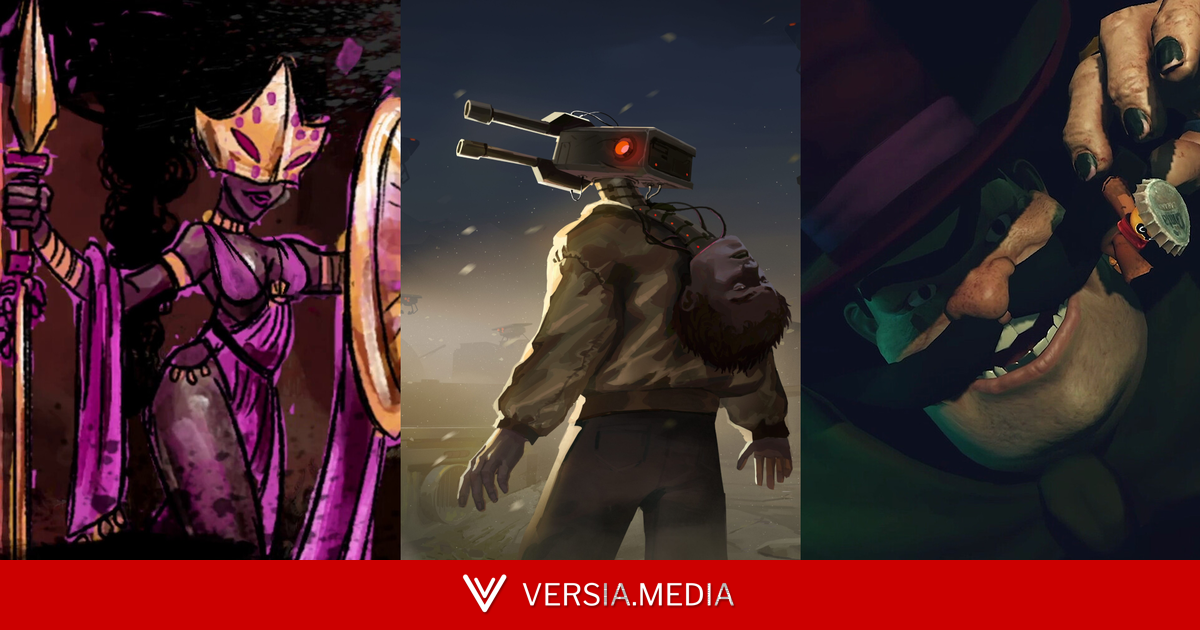
Nevertheless, the disparity in audience attention facing Latin America—using the broad label for this diverse and sprawling group of nations—doesn't reflect any shortage of inventive or imaginative games. The varied creations emerging from these countries are as fresh as the dinner-themed RPG Family Reunion, as thought-provoking as the slavery-era naval combat game Black Sailors, and as visually striking as the hand-painted action-roguelike Talaka. The broader industry is also paying attention, with substantial investments flowing into Mexican, Brazilian, Argentinian, and Chilean organizations from the traditional powerhouses of North America and Europe.
However, this funding typically isn't directed at original games. At least, not directly. As the creators themselves describe it, the narrative of game development in these countries is one of a region being tapped for low-cost outsourced talent—yet simultaneously forging a continent-wide creative movement, often by pulling directly from its own vast array of cultures and histories.
Even as a visiting journalist, it was glaringly obvious during my time at Gamescom Latam 2026 that outsourcing (or, more formally, 'external development' and/or 'work-for-hire') is a massive enterprise. Panel discussions promoting the practice share the stage with award ceremonies, while major industry players like Microsoft, Nintendo, and Obsidian send outsourcing and developer relations managers instead of the usual, more public-facing PR and marketing staff. The private business-to-business area is packed with dozens of small tables arranged in a speed-dating format, where developers get 20 minutes—tracked by large digital clocks on either side of the pen—to pitch themselves to publishers. Few bring laptops with playable versions of their own games; many, many of these meetings are about offering services.
It would be unfair to portray external development—there, I said it—as anything more sinister than the outcome of classic capitalist economic logic. Big companies elsewhere need extra QA, concept art, or engine work, certain developers are willing to do it at a lower cost, and—I'm told—they're often paid in US dollars, a stronger currency than the Mexican peso or Brazilian real. In theory, everyone benefits. But, like any form of freelancing, it's unstable work. A 2024 survey of Argentinian game developers, conducted by Women in Games Argentina, found that only 48% of respondents held permanent staff positions.
However, for many developers, any work is welcome. For Fábio Rosa, co-founder of indie studio Coffeenauts—who just showcased their Terminator-inspired, side-scrolling survival adventure Ghostless at the Latin American Games Showcase—the logic behind taking on work-for-hire projects is straightforward.
"Because of money!," he exclaims. "Because we need to get the cash flow going." The shorter, safer development cycles of external development jobs may also be appealing—it's quicker and thus an easier commitment to create a 3D model or port a game instead of building one from scratch—but funding, of any kind, remains the primary attraction.
"In Brazil," Rosa explains, "you have a lot of studios that do external development, and then you do have studios that make their own games, but it's pretty common for this to be a secondary thing. I would say Coffeenauts is a slight outlier – there are not many like us, who just work on our own games."
Paulo Santos, game designer for Talaka, is well aware of the funding challenge. "It's challenging, yes. Everywhere, around the world, it’s hard to find funding, to find money to create games," he says. Still, external development can offer more lasting benefits than just quick cash infusions.
"The market here has matured a lot in the past 10 years," Santos continues. "I would say it was very rough - by 2010 there was not much going on. Now, there is. There are lots of studios that are maturing, the industry is growing, there’s a sense of it just becoming more 'adult.' Now we can actually find talent with some experience, because back then it was like, who has the experience of shipping console games? Nobody. Now there is. Now I have shipped five console games. Other people that work with me have that, and that translates into more polished games, more creative stuff that we are able to connect into.
"The market itself, I feel like it's in the best place that it ever was. Which is not saying much, but it's better than it ever was."
The results of that accumulated experience are increasingly visible. I played Ghostless back at Gamescom Latam, and its scorched depiction of a fallen post-Soviet state is beautifully crafted in a grimly atmospheric, almost Replaced-like blend of 2D and 3D. I didn't get far enough to see it in action, but there's also an intriguing paranoia-driven element of needing to figure out which NPCs are trustworthy humans and which are the invading AI skinjobs.
Talaka is also a visual standout, and much more vibrant, and although its boon-based monster-slaying doesn't feel quite as tightly refined as Hades, it does distinguish itself through its native portrayal of Brazilian landscapes and mythology.
"Everything is inspired by something Brazilian," Santos says, pointing out enemy types like the Labatut: a fanged man-eater inspired by Pierre Labatut, a French-born officer who fought in the Brazilian War of Independence and, some say, was twisted into demonhood after being driven mad by a defeat. Literally legendary levels of research, that. And, where Hades has its pantheon of Greek gods, Talaka's buffs are dispensed by orisha, the divine spirits worshiped by Afro-Brazilian religions like Umbanda and Candomblé.
For those who do create their own games, drawing on local cultures, faiths, histories, and people is common, both as natural inspiration and to offer alternatives to the broader games industry's largely Anglocentric perspective. Thus emerge games like Talaka, or Sunny Trails, a cheerful turn-based RPG about throwing a party on an overly Brazilian island. Or A Cat in the Cangaço, a deck-building autoshooter drawn in a style reminiscent of traditional Brazilian woodcut printing and narrated like cordel literature. Or Gaucho and the Grassland, a "Brazilian cowboy" farming sim developed in-house by Mullet Madjack publishers Epopeia Games.
Then there's Black Sailors. Despite the fiery, Django-Unchained-revenge-fantasy premise of self-freed slaves turning the tables on their oppressors at sea, its ship battles are a measured (and Arco-inspired) mix of real-time and turn-based strategy, heavily reliant on the assignment of individual crew members. This provides plenty of room for character-driven moments among the group, who, according to developers Mandinga Games, showcase the diversity of Brazil's African diaspora. That means recruiting warriors and blacksmiths from historical African kingdoms like Dahomey and Oyo, while heavily integrating Afro-Brazilian music and religion.
Crewmates can play atabaque drums to boost morale in battle, while others may practice Candomblé, a distinctly local religion blending elements of Brazilian Catholicism with beliefs from the Yoruba, Bantu, and Fon peoples. Black Sailors is also set in the Bay of All Saints, a real bay surrounding the city of Salvador on Brazil's east coast. Once a hub of the Atlantic slave trade, it's now home to developers Mandinga Games, including lead dev Tiago de Melo Prudente.
"We have this Eurocentric education here that that we are formed by Portuguese indigenous people, and 'Africans'," de Melo Prudente says of the game's historical inspirations. "As if 'Africans' is only one thing, one nation. Africa is different cultures, different cosmologies. So, we want to highlight this in the game.
"We hired a historian. She's postdoc in the African diaspora in Brazil, and she researched for us all the customs, all the culture, and we made this game thinking okay, let's show that this singularity of each heritage was erased by the education that we have. We want to show this for Brazil too – we have this love for Brazilian culture here. And this Afro-Brazilian culture, it's our own, because it was formed here, but it was from several different cultures, and it was erased by history. That’s why it’s important for us."
Despite Black Sailors facing a "huge attack" from online reactionaries upon its reveal, de Melo Prudente notes that its explicit decolonial themes aren't necessarily scaring off publishers, with several having expressed interest. Still, achieving the traditional concept of 'commercial success' can be as tricky for developers here as it is for those anywhere else in the world.
Gaucho and the Grassland, for instance, proved a big hit in its native Brazil, but Epopeia—despite making a fortune on MadJack—struggled to replicate that success overseas.
As art director Gustavo Scandiuzzi da Silveira puts it, "Gaucho and the Grassland is a strong expression of our culture, and this was good and bad at the same time. Because here in Brazil it was 'Oh, finally, someone did a video game with our culture.' We heard this a lot, but we had the idea this was real selling point for the rest of the world, and that’s not become the reality."
Those who verbally attacked Black Sailors might assume that the cultural aspect itself was a sales killer, but Epopeia founder Ivan Sendin Silveira believes that they—and perhaps other Brazilian game makers—should simply adopt more hard-nosed business thinking.
"I think, in Brazil, we have a lot of quality in the art, and we are trying to think differently on the gameplay side. But I think most people in Brazil need to understand how to really create a product for the market, and not just a game, you know?," he says. "Because in Brazil, when you create a company, and you create a game, firstly you think you only, 'Ah, I love this game, and I think there are people who would consume it.' But you need to really understand, to analyse the marketing, to see this idea has already been released, and to see if it has some difference that can really force it [into attention].
"But I think we have a lot of talent here. You see a lot of publishers coming to here."
Indeed, Epopeia's next self-developed game, isometric action-roguelike Bravo, Gaspar!, refuses to retreat from local influences, from its soundtrack to its weapons—which, it turns out, are roboticized, weaponized versions of native South American animals. A toucan? No sir, that is a Toucutter, a circling bird that summons damaging vine thickets from the ground. The capybara, several large plushies of which I observed being happily carried around the Gamescom show floor, becomes the Coffeebara, a sleepy-looking beverage cup capable of dealing elemental damage through clouds of giant bubbles.
Games like Bravo, Gaspar! demonstrate that Brazilian developers, and their neighboring counterparts, have no shortage of ideas and possess the technical skills to realize them. Assuming more cash-rich publishers won't just take the next step and start funding original development directly, external investment and exposure could be all they need.
Events like Gamescom apparently help, as do foreign shows. Coffeenaut's Rosa, whose roguelike Spacelines from the Far Out won Most Promising IP and Best Casual Game at GDC sister show Game Connection America in 2019, considers this recognition to be the studio's big break.
"I used to be an English teacher. I saved some money, and I said 'I'm gonna spend it going to GDC,'" he recalls. "And I got lucky because I got an award there. I was holding the award, and my first meeting after that was with Xbox. I put the award on the table and said 'Hi, I'm a Brazilian guy!' And they invested."
Leandro Waibe, the Argentinian solo dev behind Family Reunion, also emphasizes the importance of Expo EVA—Argentina's Gamescom equivalent—in getting eyes on his games. "There's also lots of tiny events that are useful for play testing," he adds, paying tribute to the country's small but enthusiastic indie scene.
While the income from external development has helped some studios progress into original games, both Waibe and Rosa note how their respective governments have begun issuing cash grants to game developers. Coffeenauts have and continue to benefit from these schemes directly, and while Ghostless isn't a visibly Brazilian game (in the same way that Black Sailors or Talaka are), both Rosa and Brazil's Ministério da Cultura have reached the same conclusion: what's good for the games business is good for the country.
"I feel, and I think a lot of the other Brazilians here feel that Brazil, even though we're an emerging country, is pretty good at exporting creative stuff," he explains. "Like the whole world knows Brazilian music, everybody knows what bossa nova is, or samba. Brazilian cinema is starting to get pretty popular, and now the government is understanding that games are also part of this whole thing. And this was crucial for us as well – one of the investors in Ghostless is the government of the state of São Paulo. And it's pretty cool, because this is public investment, so they're not really like, 'Oh, I want revenue share.' They’re like 'Make games! Hire people!'"
Mandinga Games also received a grant to help make Black Sailors, though Tiago de Melo Prudente—whom the funds allowed to quit his civil engineering job—sees the value of cultural, educational, and legal shifts too.
"It's hard to say that's enough," he tells me of the Brazilian government's efforts. "But they are doing something. Last year, it was approved to regulate the gaming dev profession. Until then, we didn’t have a regulated profession in Brazil. That made it really hard to, for example, get dev kits. If you got a PlayStation dev kit from Sony, it was free, but you had to go to them to get it, because it was a mess to send things to Brazil. And even though we were telling customs 'It’s for work, it’s not a console, it was free,' we still had to pay a fortune in taxes because we were entering Brazil with this dev kit, and they didn’t know what it was. But the law is about to change.
"And this game was invested in, with a government grant, and because of this I’m a full-time game developer now. Because if not for this grant, I would still be a civil engineer, and working on all these projects in my free time. So it’s hard to say [the government is] doing enough, but it’s doing something."
Notably, none of Brazil, Argentina, Chile, or Mexico currently offer tax credits specifically for game development, a potentially major financial disadvantage against more established dev hotspots like the US, UK, and Canada. I don't know for a fact that such policies would unleash these countries as the planet's next superpowers of play, but one thing is certain: these developers have a lot more to offer than outsourced odd jobs.