Home
News
Spore
Me beautiful Spores
I don't usually consider Spore to be a game that originated from any single individual, but rather an omnipresent force that simply installs itself on your computer. That's nonsense, of course, since it was developed by The Sims creator Will Wright during his time at Maxis.
It wasn't just him who made it either; many people were involved, and as part of a wonderfully assembled oral history over at the Design Room, they all recounted how the creature creator game called Spore partially came to be. As it turns out, according to designer and lead engineer Chris Hecker, the initial concept emerged from Wright wanting to "do the Powers of 10." The Powers of 10 is a 1977 documentary that begins by observing a couple having a picnic before pulling back further and further into the universe; you can already see the basis for Spore's structure in that format.
"The anthropic principle, the Copernican principle [...] the Great Filter — there are all these conceptual frameworks that inspired Spore," Wright explains. "At the same time, we wanted to create an homage to these different game genres. The first one being Pac-Man, the next one being a first-person shooter (or eater), then an RTS, then eventually a 4X space game."
Hecker jokingly responded, "We'll just take [a bunch] of the best video games ever and smash them all into one video game. What could possibly go wrong?" A lot! We all know that Spore was quite an imperfect game, with Wright even acknowledging that himself, saying, "Probably the biggest criticism of Spore, which I totally accept, is that it felt like five separate games that were kind of stuck together. Which it pretty much was."
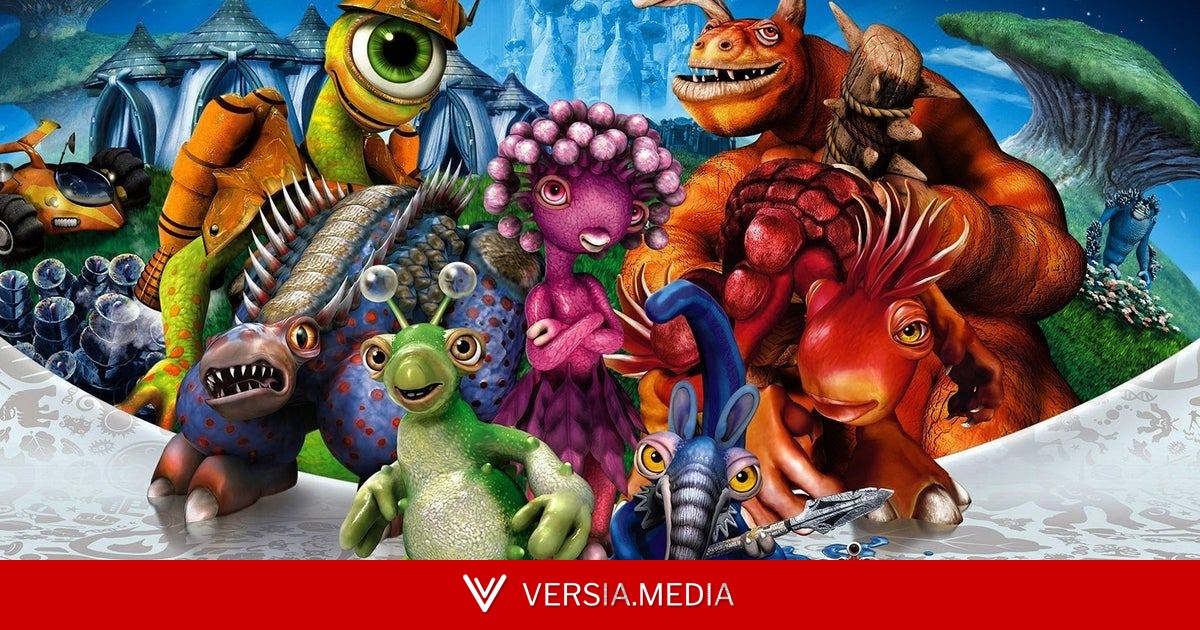
The most fascinating of these elements was of course the actual creature creation parts where you can Frankenstein-like mix and match all sorts of body parts to craft a critter of your own. This was no easy task to design though, with designer Chaim Gingold recalling, "[Animator John Cimino] was basically giving me his expert practice as an artist, and I was like, Right, we need to get people to be able to do that without necessarily teaching them how to do all of that.
"And that's where the idea [came from to make it] more like Mr. Potato Head. But talking about Mr. Potato Head kind of pissed a lot of people off because they were like, We're not making Mr. Potato Head. That's too simple and dumb. […] I think I mostly pissed off Chris Hecker, but other people too."
Ultimately it did have to be treated as something more complex than Mr. Potato Head, as Hecker noted that typically designing a creature that looks and moves correctly is something that would be done "by a professional in a tool that costs thousands of dollars and takes months and months and months. But we had to do it in real time when the player stuck a new arm on the guy."
Even still, that Mr. Potato Head quality certainly feels true even now, and even if the final result of the entirety of Spore wasn't some flawless experience, you can sense that influence of Powers of 10 too. The whole oral history is worth a read, as it delves into plenty of other challenges the game faced over the years as well.