Home
Features
Before Darkness Falls (2026)
"We find ourselves in a truly challenging and peculiar situation at this moment."
One of the concerns confronting game developers in search of a publisher is the risk associated with a prototype—defined by Suspicious Developments head Tom Francis as "a playable build that effectively demonstrates what makes your game special—a proof of concept." More specifically, Francis notes that a "prototypable project is one where you can create that build within a timeframe you can afford to lose."
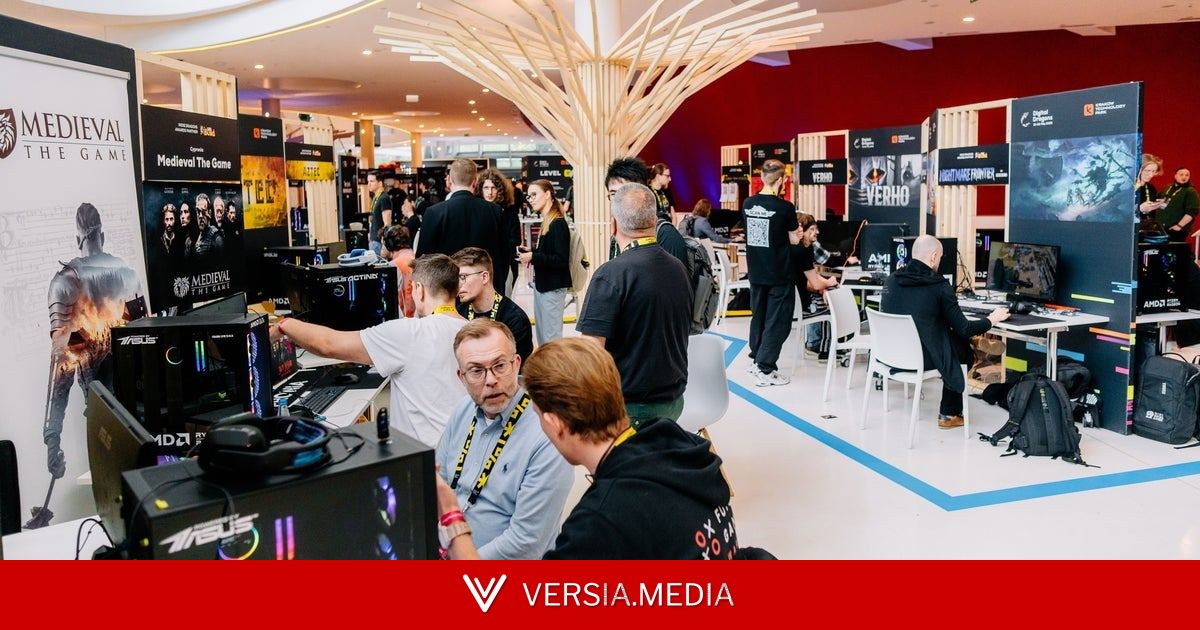
Few independent developers have ample time to spare, and there is no certainty that their efforts will be rewarded. Yet, numerous publishers today refuse to engage unless they can access a playable segment of a game. At this year's Digital Dragons event in Krakow, I conversed with representatives from 11 Bit, Jagex, and Bloober Team, along with several independent studios, regarding the apparent necessity of prototypes and the related temptation to assemble them using generative AI.
Hubert Popławski serves as lead developer at Maverick Souls Studio, whose team includes former contributors to Dying Light 2 and Frostpunk 2. The studio's debut title, Before Darkness Falls, is a promising 3D survival tactics simulation where you defend and repair a crumbling industrial complex on a hostile planet. The team showcased a prototype at Digital Dragons, constructed over six months after securing initial funding through the Digital Dragon Accelerator program.
A six-month development period is quite swift for a team of 2 to 10 individuals. As Popławski informed me after I tried the build, a less experienced group would likely have struggled. "It really hinges on the team's expertise," he stated. "I believe junior developers find it very challenging to produce something visually compelling enough to reassure investors and publishers, to make them consider investing, right? So it's not an equal playing field. For teams like ours, made up of veterans with over five or ten years of experience, it's considerably easier."
This poses a challenge both for younger developers and for smaller publishers aiming to back riskier, potentially groundbreaking projects, such as Frostpunk creator 11 bit, whose third-party partnerships include Indika, The Thaumaturge, and the upcoming squalorcore simulation Crop. "For us, I believe the biggest hurdle is the ongoing issue of indie developers lacking budgets for prototypes, while we typically prefer to sign projects that have them," 11 bit's external development director Rufus Kubica told me elsewhere at the event.
"Some developers or other publishers, or even occasionally fans, can fund prototypes, and they somewhat resolve the chicken-and-egg dilemma," he continued. "For us, because we are so code-focused, and we require evidence of the core features, the unique selling points, and everything else, we cannot work with a paper pitch. Unless it's a highly established developer approaching us, and we are familiar with their track record so we can discuss the project. But typically when collaborating with indies, it's a relatively new team, so if they lack a playable proof, it's a significant challenge for us."
11 bit may not have the resources of, say, Epic Games, which is financially robust enough to run prototype incubation programs for novice teams. However, Kubica added that, overall, this is not an opportune time to be pitching video games.
"There is this strange limbo where, if you cannot initiate things independently, or you lack other funding, it may be difficult to find a publisher in the current industry," he says. "All publishers—and we are quite well connected with others—are very friendly because, again, it's about the company's ethos. We want to support other indie developers and publishers, so we share insights on how things operate. And I observe that everyone at, let's call it our level, very broadly, our tier of publishing—everyone is extremely risk-averse."
For Bloober Team's head of publishing Michał Gembicki, having a playable prototype is "absolutely essential." Speaking during a Digital Dragon panel discussion on the current publishing landscape, he emphasized that securing a deal otherwise is "close to impossible, unless you are, of course, a recognized studio. [Or if] you own an IP, or you have a strong track record, and you can claim this will resemble something you've done before. Then yes, of course, you can try, but still, [the publishers] will likely hold off until you at least deliver a video of something playable."
"The overarching point is that it's a more risk-averse environment," added Anna Mostyn-Williams, senior director of business development and partnerships at RuneScape developer Jagex. "Anything you can do to demonstrate risk reduction will be beneficial. So naturally, the prototype will help."
Publishers may occasionally offer contracts to fund prototype creation if they identify an idea they want to secure before another company snatches it. They might also approach developers they trust and finance a prototype for a specific type of game they desire in their portfolio. However, these opportunities are scarce, as I learned from other prospecting developers on the Digital Dragons show floor.
Michał Staniszewski is studio director for Plastic, a legendary Polish demoscene group dating back to the 1990s. Over the past two decades, Plastic has collaborated with Sony Santa Monica on several captivating oddities—Linger in Shadows, VR game Datura, and Bound, a stunning game featuring a ballerina darting and spinning through a world of furious, fragmented color.
A few years ago, several Plastic members split from Sony to become independent again. After posting videos of playable builds on TikTok, they secured funding from Epic for a procedurally generated sandbox game, the delightfully absurd Boundless Fun Simulator, where you assemble game modes and props on the fly using stickers and sliders.
"Totally 100% agree," Staniszewski said when I asked if it's now harder for indie developers to gain attention without a prototype. As for why publishers are more cautious, he straightforwardly points to rising development costs. "During our time with Sony, we were external with Santa Monica, and there were games like Journey and other indie studios, like Dear Esther and so on," Staniszewski recalled. "Typically, we would make a game over four years, on average, and it was acceptable. Then all those studios took six to eight years for their next game. We're in a really tough, strange place right now. It's changed dramatically."
As in other areas of life, one way indie developers have sought to reduce expenses is by using generative AI tools. There is a surge of chatbot software specifically designed for rapid prototyping, regardless of expertise. In November 2025, Amazon Web Services introduced "Agentic Arcade," a tools package styled like an old coin-op arcade, which claims to deliver "playable game prototypes in minutes." Unity offers Unity Muse, aimed at "creators of all skill levels." Within large, established teams like Crystal Dynamics, generative AI prototyping has become routine at many development stages, despite strong reactions to Steam disclosures.
Boundless Fun Simulator, as far as I know, does not include any generated materials, but Staniszewski is open to generative AI usage, particularly for smaller teams of experienced professionals. "I think generating entire games is a distant future concept," he said. "But automatic code generation for simple tasks like UI—if you're a skilled programmer with 10 years of experience, you'll get a tenfold boost in productivity. So I believe indie developers consisting of one or two people will become much more productive in a year, maybe, because it's advancing so quickly."
Despite these promised efficiencies, the publisher executives I spoke to at Digital Dragons were highly ambivalent about pitches involving generated or partially generated prototypes. "I'm not against AI myself, in general," 11 bit's Kubica told me. "It's a useful tool, but useful for specific things, and I prefer when things are ultimately human-made." The fundamental issue for a publisher, he continued, is that a prototype heavily reliant on generative AI offers little evidence of a team's abilities. "How can I be sure this developer can deliver the quality they're promising?" Kubica added. "If everything is done with AI, how do you know they have the artists to make it happen?" He noted that due to generative AI, "it's easier to overpromise quality early on."
Bloober Team's Gembicki feels "there's nothing worse than an AI-generated pitch." Speaking during the aforementioned panel discussion, he commented, "I would prefer to see a sketch or something work in progress, but done by hand by that team, showcasing the art they want to achieve—usually it's about art, right? Rather than this AI content." He does consider generative AI usage "fine" for the market research aspects of a pitch, such as collecting data and producing charts. "But definitely not for writing text, and not for creating the artwork."
Jagex's Mostyn-Williams agreed. "Yes, use it for market info, for that side of things, but people can tell," she warned. "It's so obvious. So be really, really careful with it. And if you are going to use it, make sure you go through it afterwards and 'de-AI' it. I know that's an obvious point, but many people don't."
For Maverick's Hubert Popławski, another consideration is the risk of a PR disaster, even before signing a publisher. Generative AI pervades today's games industry, but it is a widely disliked technology—culturally cannibalistic, energy-intensive, error-prone, and a pretext for workforce reduction. "The backlash from using AI is so scary," he says. "People still don't like the idea that you're using AI. If you do, it will be 'Oh, that's AI. No, thank you.'"
I personally despise generative AI, partly because I view it as part of a broader anti-social oligarchic agenda, but as with any technology, I think there are less harmful applications given some responsibility and transparency—for example, proprietary, bespoke, and limited models that pay or otherwise obtain consent for the material they use for "training." I mostly avoid games of any scale that incorporate AI generation, but I can understand the appeal for a smaller team trying to catch a publisher's eye during a time of cutbacks.
One thing I forgot to ask Popławski at Digital Dragons is simply whether creating a prototype is fun. It feels like it should be the aspect of development that people enjoy most. It's the stage where ideas become a tentative reality, where the project has some solidity but is still very flexible. I find it sad, in general, that generative AI advocates focus so heavily on its use for rapid "ideation," brainstorming, and testing concepts. Surely, this is the part of the project where you feel least inclined to delegate work to some form of automation.
Speaking to me later via email, Popławski predictably took a less idealistic view. For him, making a prototype can be enjoyable but is more often a grueling gamble. "Creating a prototype is first and foremost stressful," he said. "In some ways, it’s a kind of 'First Judgment Day' for the project. It can be fun when you have the funds and the team’s ambitions align with the project’s scope, but if you’re starting from scratch and still need to prove yourself, there’s a lot of pressure, and that can take the fun out of it."
The fixation on having a prototype can make discussions with potential backers feel utterly arbitrary, Popławski continued. "We had a situation in a B2B meeting where someone didn’t take us seriously regarding scope and funding until we showed them our gameplay reveal trailer," he recalled. "Once they saw what we had actually built, they relaxed and nodded along, as if the claims that had sounded ambitious a moment earlier suddenly became completely reasonable."
This feature is based on a trip to Digital Dragons in May 2026, with the event organizers covering travel and accommodation expenses.